


Why Period Justice and Climate Justice Are the Same Fight
By Benedicta Apuamah
Global Health Advocate, SRHR Researcher, Founder of Girls for Development Goals Foundation
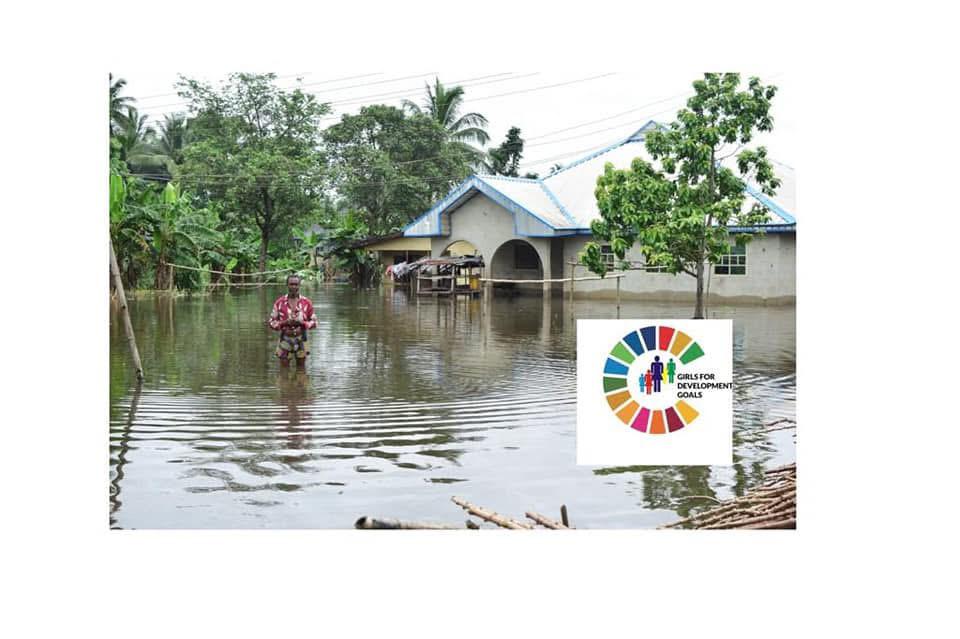
In 2022, Onyah community flooded.
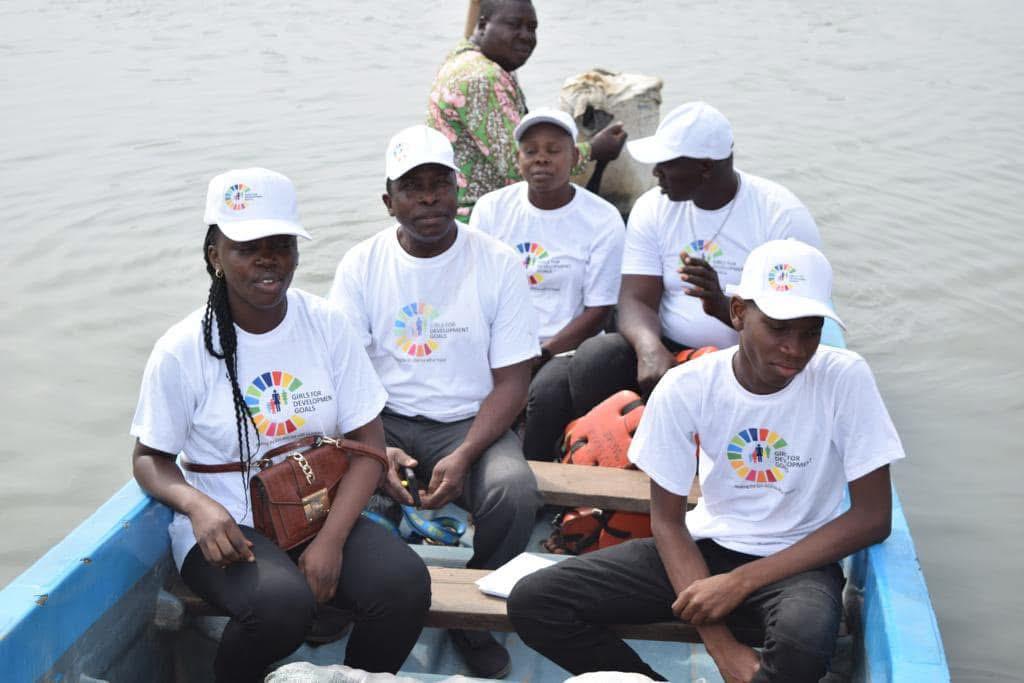
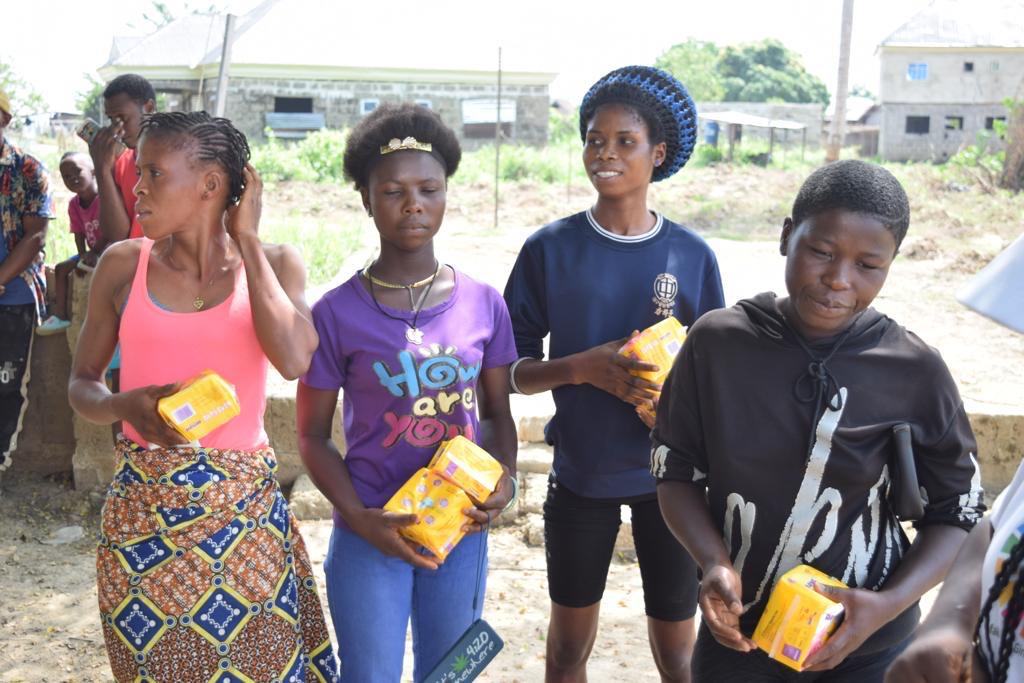
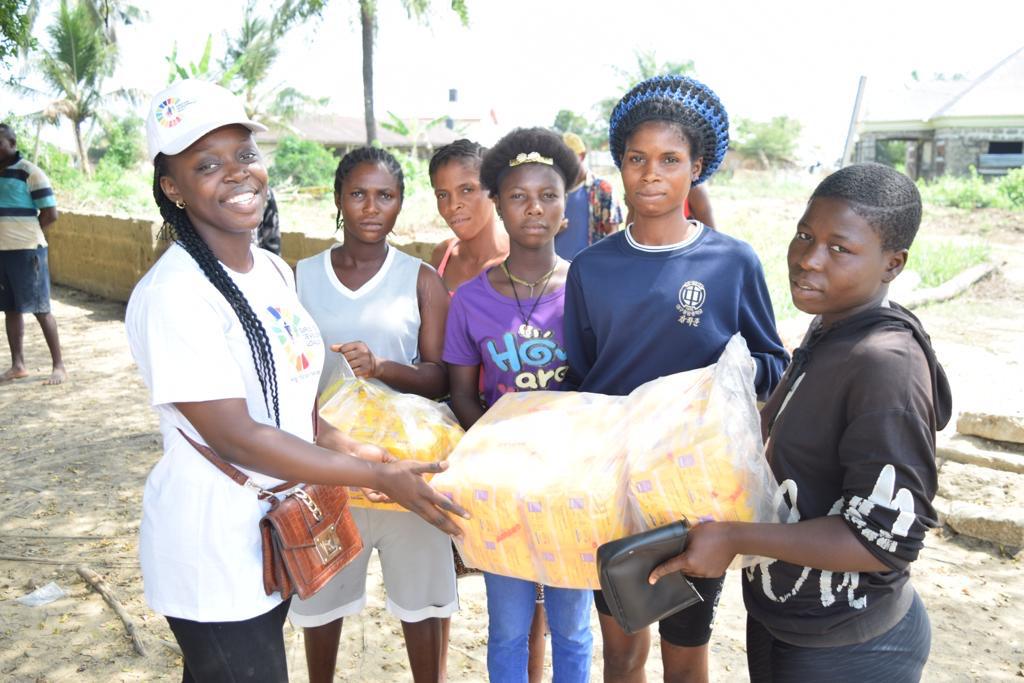
The Girls for Development Goals Foundation, my organisation, was among those who responded. We gathered what we could and went to the women and girls who needed support. We brought food items and other supplies. And among them, disposable menstrual pads.
Not because we didn’t care. Not because we hadn’t thought about it. Because that was what we could afford. That was what we could lay our hands on.
I watched those pads being handed out and felt relief that we could help at all. But something stayed with me long after the floodwaters receded.
Those pads, each one wrapped in plastic, made from fossil fuels, bleached with chemicals, would sit in the ground for up to 800 years after a single use. The flooding that displaced those women and girls was driven by a climate system under increasing stress. And the production of the very pads we were handing out was contributing to that same stress.
We were responding to one crisis while quietly feeding another.
I could not stop thinking about it. For four years, I could not stop thinking about it.
From Onyah to Action
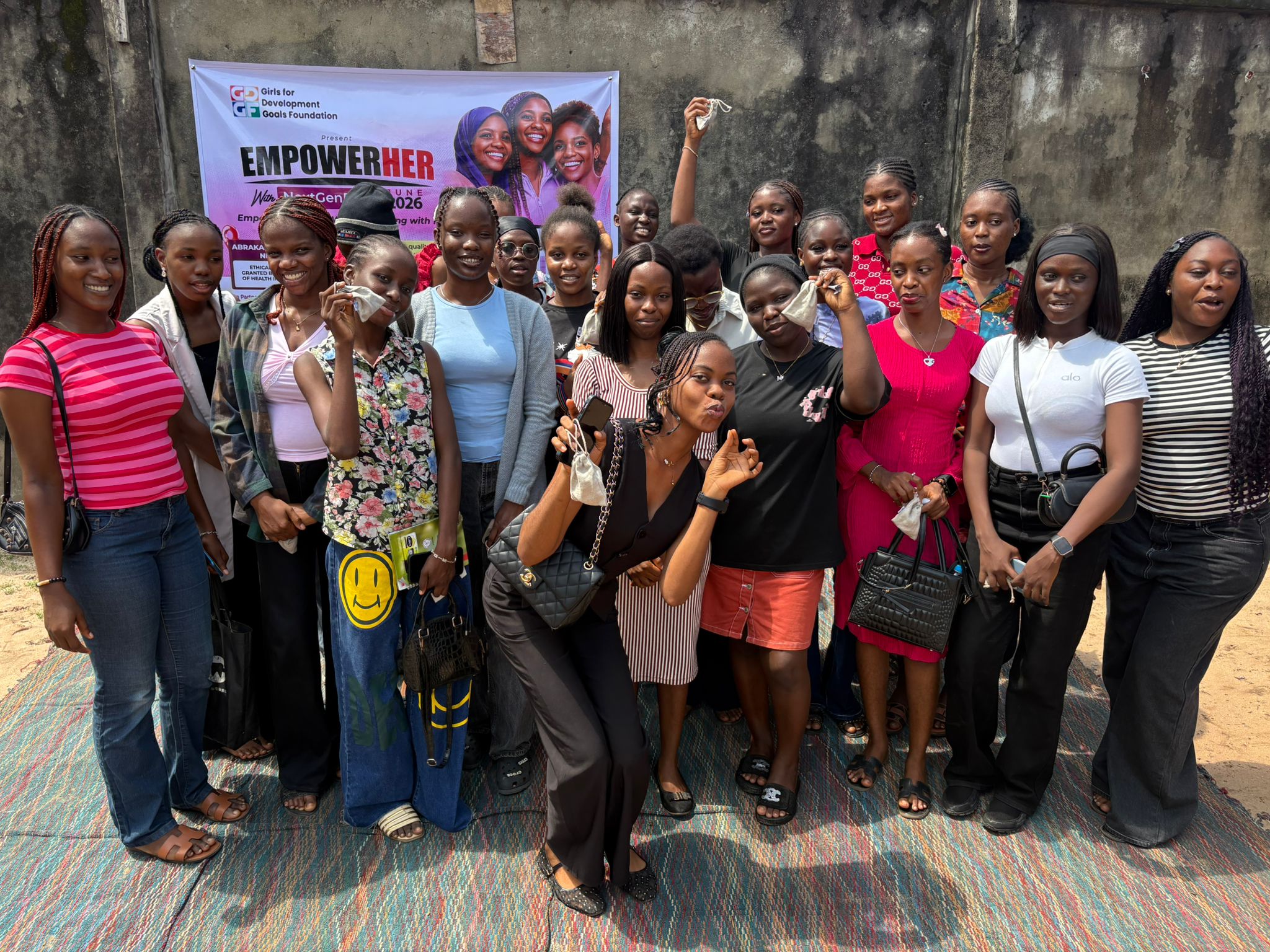
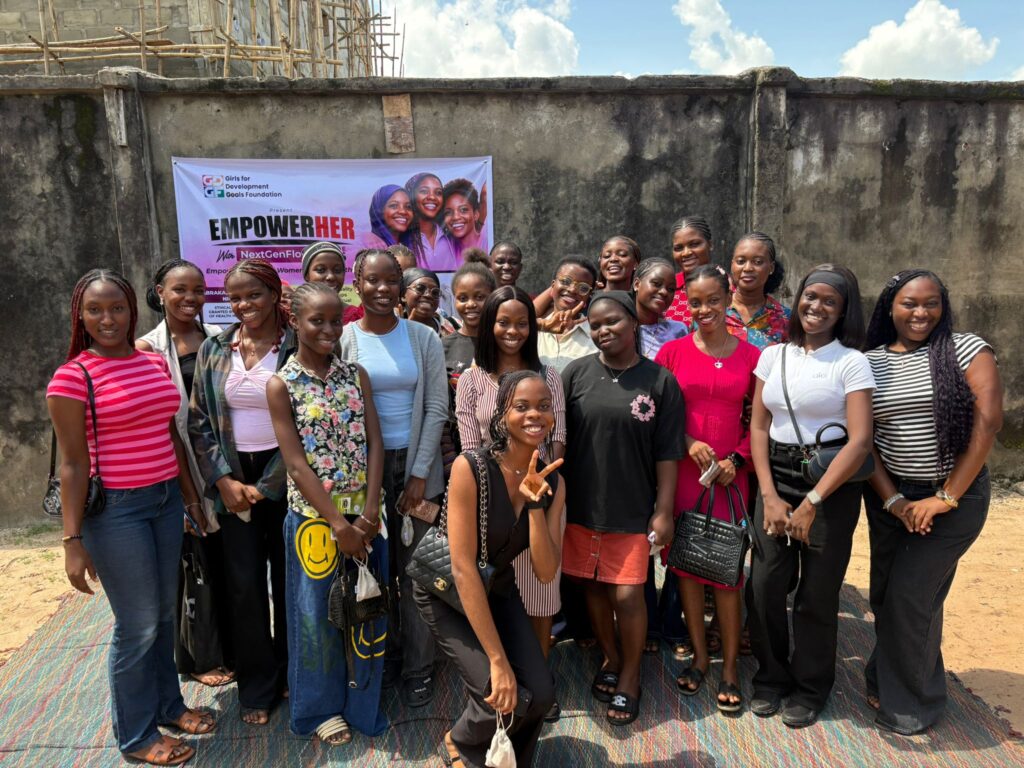
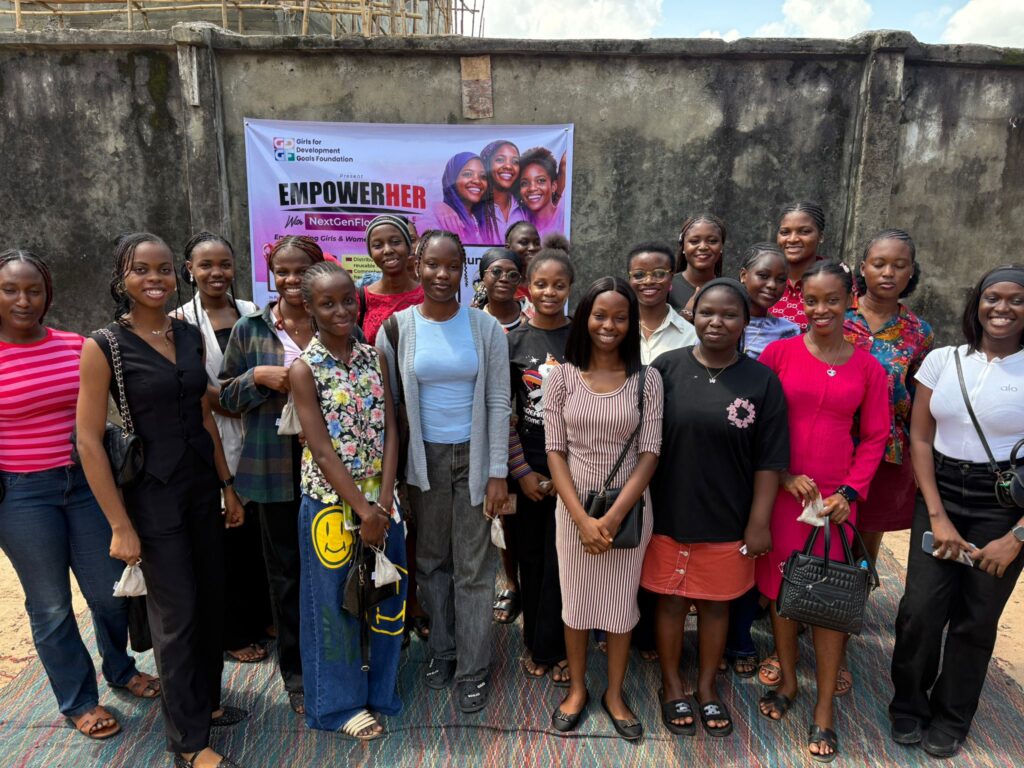
That question, can we do better, is what led the Girls for Development Goals Foundation to partner with The Cup Foundation in April 2026 to distribute Lunette Cups to women and girls in Nigeria. Our first distribution event was just two weeks ago.
A Lunette Cup is a reusable menstrual cup that lasts up to 10 years. It requires no ongoing supply chain. It generates a fraction of the environmental footprint of disposable products. And when a flood hits and roads are damaged and supply chains collapse, a woman with a reusable cup is not left without options.
That is not just sustainability. That is resilience.
I am not writing this from a research paper. I am writing this from Onyah community in 2022, from four years of carrying a question I could not put down, and from the faces of women two weeks ago holding a Lunette Cup for the first time.
The research confirms what I already knew from the ground. But the ground came first.
What the Research Tells Us
I call it the Menstrual Carbon Footprint. And the numbers are striking.
A single disposable menstrual pad contains up to 90% plastic, fossil fuel derivatives that require significant energy and raw materials to produce. Research published in the International Journal of Gynecology and Obstetrics notes that disposable pads cause the highest environmental impact of any menstrual product, driven by fossil fuel depletion in production, carbon emissions, and the sheer volume of waste generated.
A year’s worth of typical disposable menstrual products carries a carbon footprint of 5.3 kg CO₂ equivalent, roughly the same as driving 13.5 miles in a fossil fuel car. Multiply that by the estimated 1.8 billion people who menstruate globally, and the scale becomes difficult to ignore.
But the environmental cost of production is only one part of the problem.
A 2026 systematic review on climate change and menstrual health found that floods, cyclones, droughts, and water scarcity all disrupt access to menstrual materials, hygiene infrastructure, and privacy for women and girls. UNICEF documented that devastating floods left eight million girls and women in Pakistan without access to basic menstrual hygiene products. The UN estimates that 80% of people displaced by climate change are women. And when displacement happens, menstruation does not pause.
I did not need the systematic review to tell me that. I had Onyah community in 2022.
The global supply chains that deliver disposable menstrual products to low- and middle-income countries are long, expensive, and climate-vulnerable. Floods damage roads. Energy price spikes affect manufacturing. The communities with the least resources to absorb these shocks are the ones most exposed to them and most dependent on that supply chain for something as basic as managing a monthly biological process.
This is the double crisis nobody is naming clearly enough.
Disposable menstrual products contribute to the climate damage that then destroys access to those same products.
The Solution: Climate-Smart Menstruation
Switching from tampons to a menstrual cup reduces carbon impact 16 times over annually.
One study found that a menstrual cup needs to be used for just one month before it has already offset the emissions of its own production compared to disposables.
Through our partnership with The Cup Foundation, the Girls for Development Goals Foundation is distributing Lunette Cups to women and girls in Nigeria. This is not just an environmental programme. It is a resilience programme. We are working to break the dependence of vulnerable communities on a disposable supply chain that will always fail them at the worst possible moment.
This is what I mean by climate-smart menstruation: redesigning the entire menstrual health system so that it is sustainable, resilient, and centred on the communities most at risk from the climate crisis.
What Needs to Change
The evidence is there. The lived experience is there. What is missing is the political will to connect these dots in global health policy.
Climate adaptation plans almost never include menstrual health as a line item. Humanitarian response frameworks treat menstrual products as an afterthought. The menstrual health sector and the climate justice movement rarely speak to each other, even though they are fighting the same battle for the same communities.
Menstrual health must be written into climate adaptation plans.
When we plan for floods, droughts, and displacement, we must plan for periods. That means pre-positioning reusable products in vulnerable communities before disasters strike, not sending disposable pads after.
Reusable menstrual products must be recognised as climate resilience tools, not just lifestyle choices for consumers in the Global North. The communities in the Global South who bear the greatest burden of climate change deserve sustainable menstrual solutions that do not collapse when the climate does.
The research gap must be closed.
The evidence base on climate change and menstrual health is still thin and concentrated in South Asia. We need evidence from West Africa, from displaced communities, and from the communities the Girls for Development Goals Foundation works with in Nigeria.
This Is Personal
In 2022, I handed out disposable pads in a flooded community and asked myself if we could do better.
In April 2026, we started doing better.
The Menstrual Carbon Footprint is not an abstract concept. It is a flooded community in Nigeria. It is four years of a question that would not go away. It is a Lunette Cup held by a woman in Nigeria two weeks ago for the first time.
Period justice and climate justice are the same fight.
I know because I have been in the middle of both, in the same community, four years apart.
It is time our policies, our programmes, and our funding started treating them that way.
About the Author
Benedicta Apuamah is a global health advocate, SRHR researcher, and Founder of the Girls for Development Goals Foundation (GDGF) in Nigeria. She is the 2024 Science Speed Talk Winner at the Geneva Health Forum, where her research on the acceptability of sexual and reproductive health among refugee women won the Jet d’Or de Genève. Through a partnership with The Cup Foundation, GDGF distributes Lunette Cups to women and girls in Nigeria as part of its climate-smart menstrual health programme.
Website: www.benedictaapuamah.com
References
- Harrison et al. (2023). Menstruation: Environmental impact and need for global health equity. International Journal of Gynecology and Obstetrics.
https://obgyn.onlinelibrary.wiley.com/doi/full/10.1002/ijgo.14311 - Carbon Literacy Project (2025). Environmenstrual Justice and the Carbon Cost of Period Products.
https://carbonliteracy.com/environmenstrual-justice-and-the-carbon-cost-of-period-products/ - Zero Waste Scotland. The Carbon Impacts of Menstrual Products.
https://www.zerowastescotland.org.uk/resources/carbon-impacts-menstrual-products - Days for Girls International (2024). Exploring the Environmental Footprint of Period Products.
https://www.daysforgirls.org/blog/exploring-the-environmental-footprint-of-period-products/ - Research Square (2026). Effects of Climate Change on Menstrual Health and Hygiene: A Global Mixed-Methods Systematic Review.
https://www.researchsquare.com/article/rs-8763541/v1 - UNICEF South Asia. Climate Change’s Greatest Victims Are Women and Girls.
https://www.unicef.org/rosa/blog/climate-changes-greatest-victims-are-women-and-girls - PMC (2025). The Ripple Effect: Impacts of Climate Change on Menstrual Health and Paths to Resilience.
https://www.ncbi.nlm.nih.gov/pmc/articles/PMC12058667/