


Some moments only make sense when you look back at the whole road.
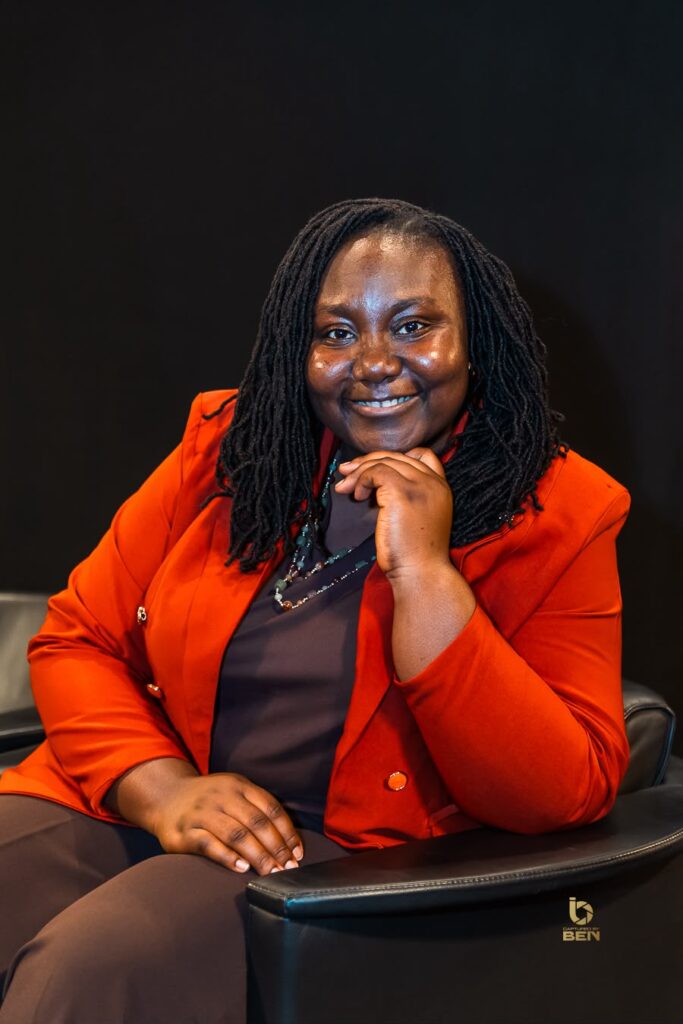
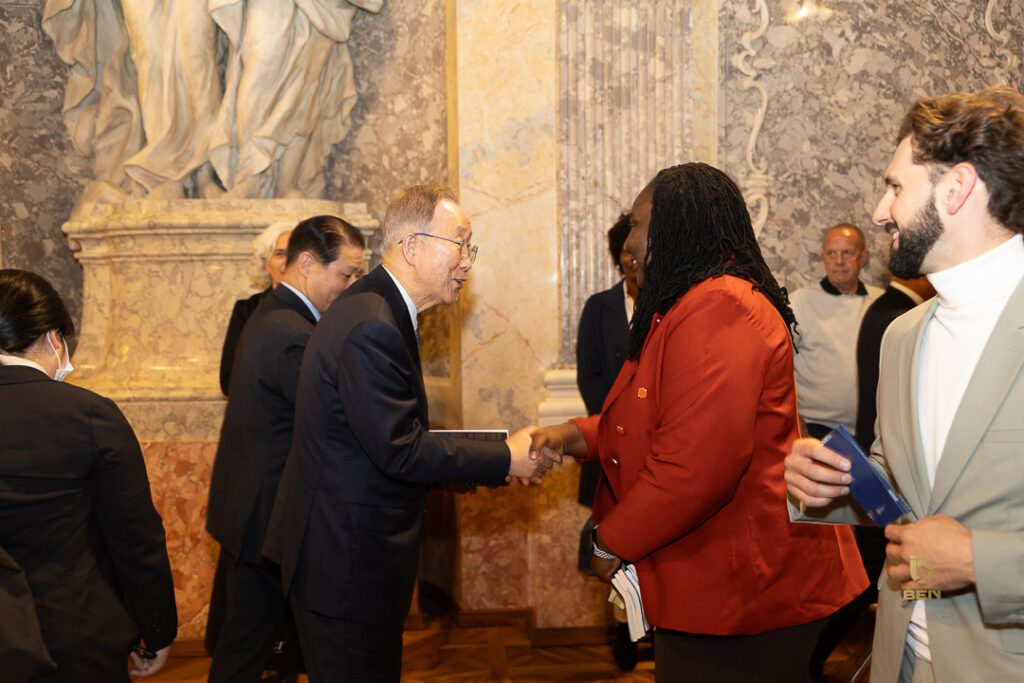
A few years ago, a scholarship carrying the name of Ban Ki-moon helped a pharmacist from Obiaruku, a small town in Delta State, Nigeria, complete her Master’s degree at MCI in Innsbruck. On Friday, 23 October 2026, that same pharmacist sat on a stage in Vienna beside him, the 8th Secretary-General of the United Nations, to talk about the climate crisis and global citizenship.
That pharmacist is me. I am still letting it sink in.
The day
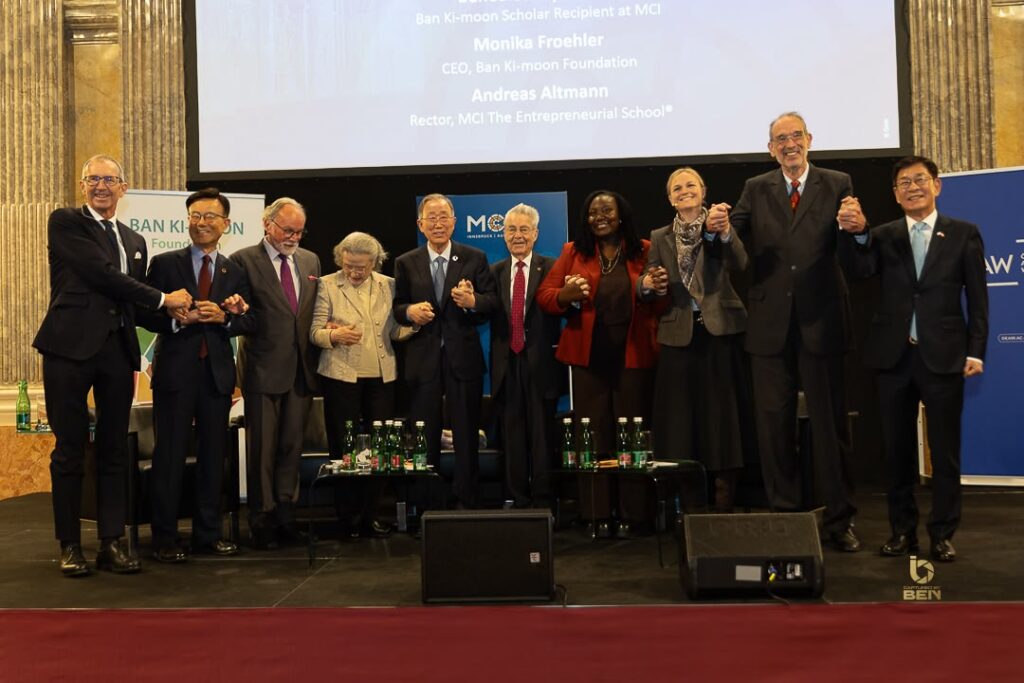
The MCI Distinguished Guest Event took place at the Austrian Academy of Sciences in Vienna, hosted by MCI, the Ban Ki-moon Foundation and the Diplomatic Academy of Vienna. Former Austrian President Heinz Fischer and other guests opened the afternoon, and Secretary-General Ban gave the keynote, “Climate Crisis and Global Citizenship”.
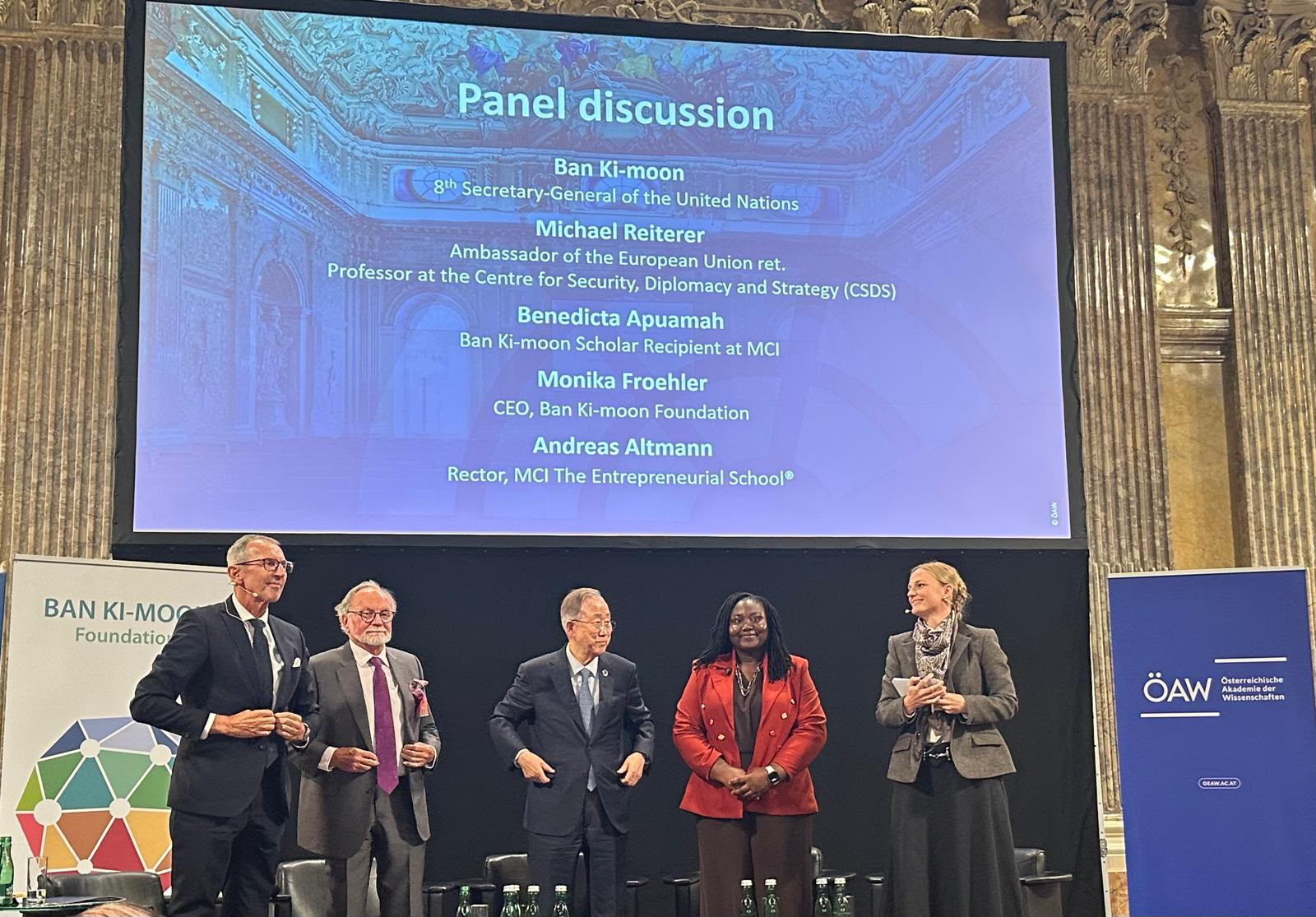
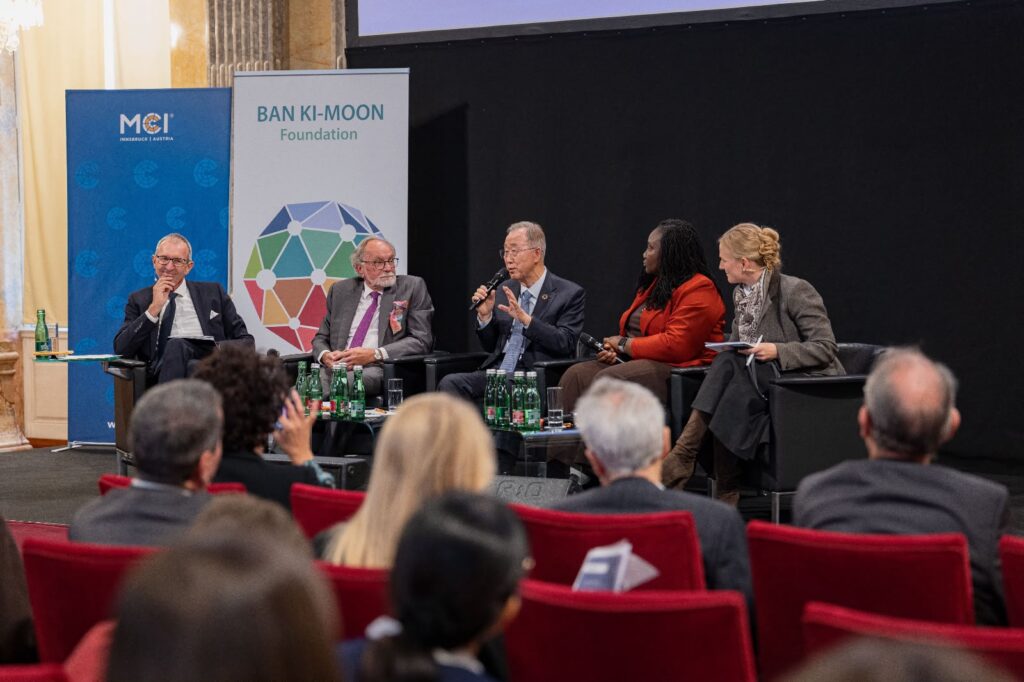
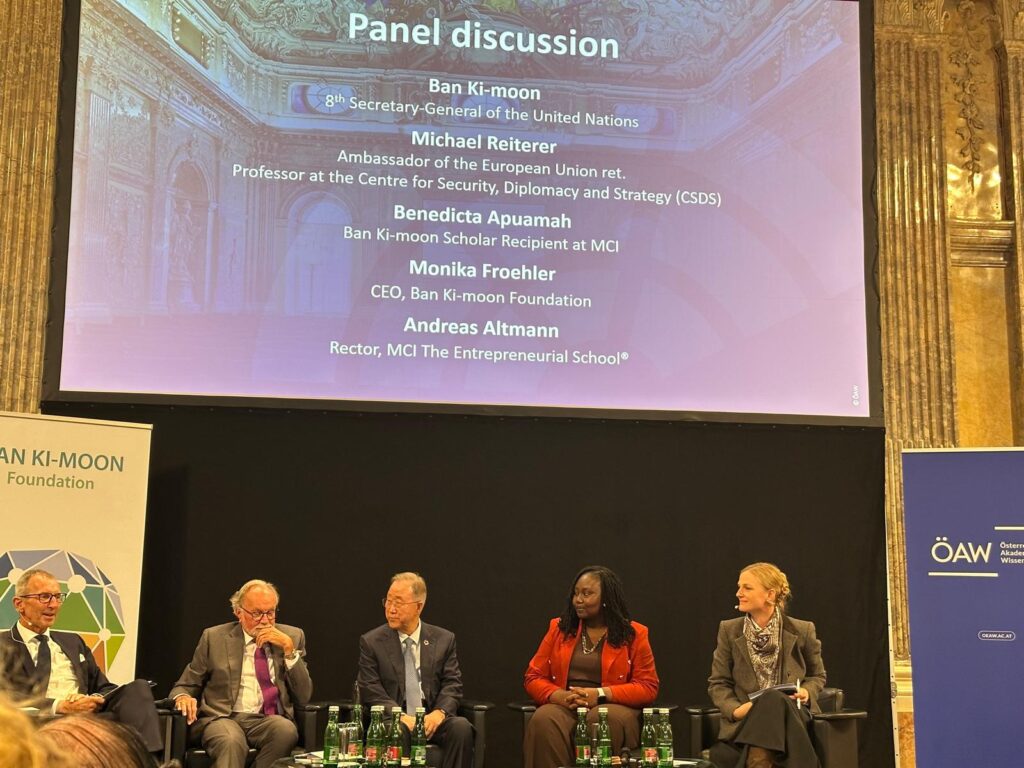
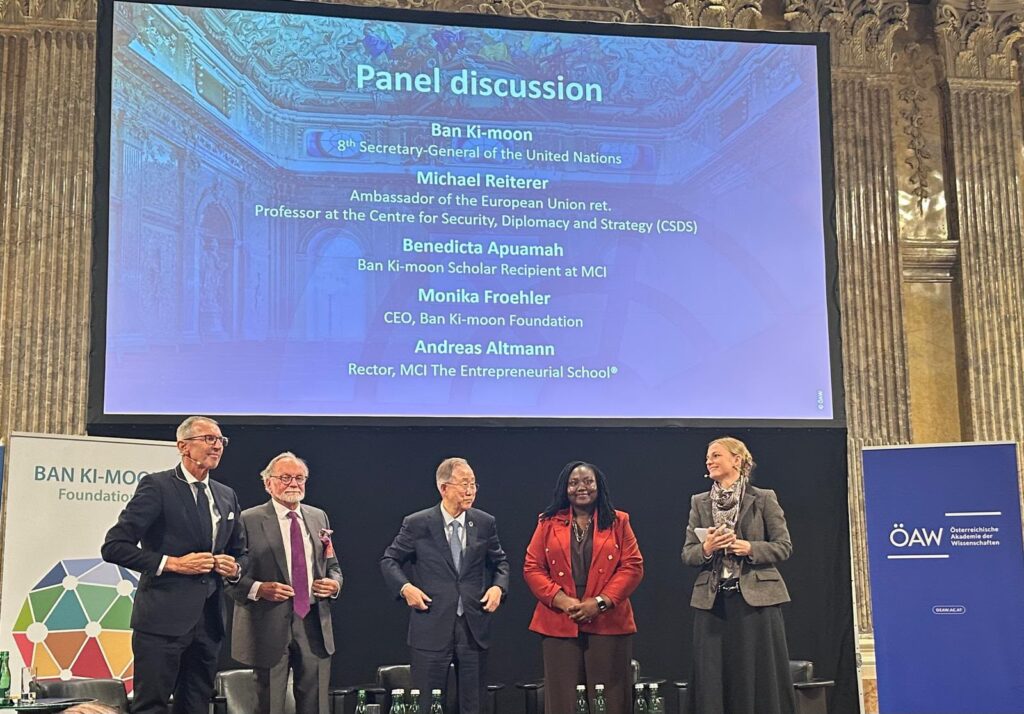
Then came the panel. I joined Secretary-General Ban and Prof. Michael Reiterer, former Ambassador of the European Union, with Monika Froehler, CEO of the Ban Ki-moon Foundation, and Rector Andreas Altmann of MCI as moderators.
Three perspectives: global diplomacy, regional cooperation, and the community level. Mine was the third.
Prof. Ban spoke about the need to combine passion with compassion. Passion and ambition drive us, he said, but compassion is the acid test of their direction: does your passion serve only yourself, or does it serve people?
He also reminded us that leadership means leading by example, and he spoke about the fight to establish a separate UN agency dedicated to women. Hearing that from the man who led that fight, sitting beside him as a young woman working on girls’ health, was a moment I will not forget.
What I shared
Monika asked me what global citizenship looks like when a young person practices it locally. For me, global citizenship is not a passport. It is what you do when a global problem shows up in your own community.
In 2022, floods hit Onyah community in Delta State. We brought what we could: disposable pads. And I realized we were answering one crisis by adding another. Those pads will sit in that flooded ground for centuries, and reusable options had simply not reached the girls there.
People talk about the menstrual carbon footprint: the waste our period products leave behind. In Onyah I saw the other side too. Climate change makes period poverty worse, and the crisis response adds to the climate burden. It is about health, poverty and freedom. It is about who gets a voice.
So we changed course. Through the Girls for Development Goals Foundation and with The Cup Foundation, we introduce reusable cups and let the community lead. And we tell the story through PeriodxClimate, an animated series of African stories on periods, dignity and a changing climate.
On universities, I said yes: they should keep bringing inspiring leaders to students, and add one step. Invite the people living the problem, not only those who have solved one. Give students room and support to practice global citizenship in their own communities. Universities are where a local idea becomes a global one.
And when asked where things go wrong between climate promises and people, I spoke as a pharmacist. On Nigeria’s malaria supply chain, the medicine was bought, but it did not always reach the clinic. Climate support breaks in the same places. My answer: work through the people communities already trust, ask the most affected before you design, and measure what arrives, not what was pledged. A promise is kept when the girl feels it.
What I’m taking home
Prof. Reiterer gave an example that stayed with me. In the Sahel, he said, high-level meetings go on about what people need, when what they need may be as simple as a shirt, food and water. High-level policy can miss the simplest demands at the grassroots. It was exactly the gap I had come to talk about, and I built on his example in my own answer.
The biggest lesson for me is simple. Scholarships don’t just fund a degree. They fund a future nobody can see yet. Someone invested in me before I could prove anything, and the work I do today, with girls in Delta State and through PeriodxClimate, grew out of that trust.
Thank you
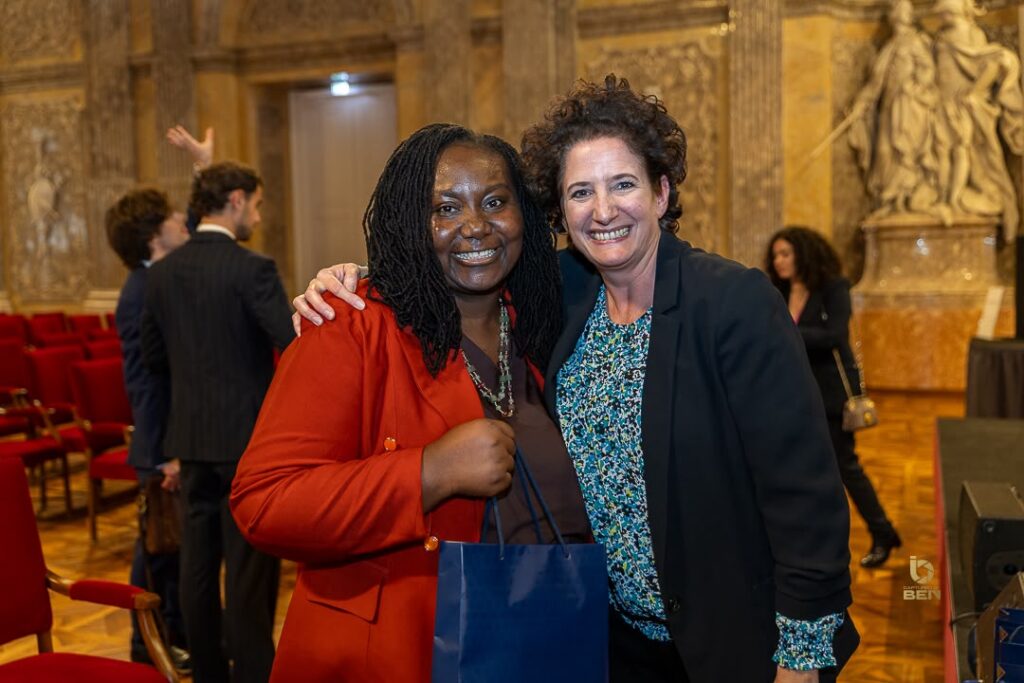
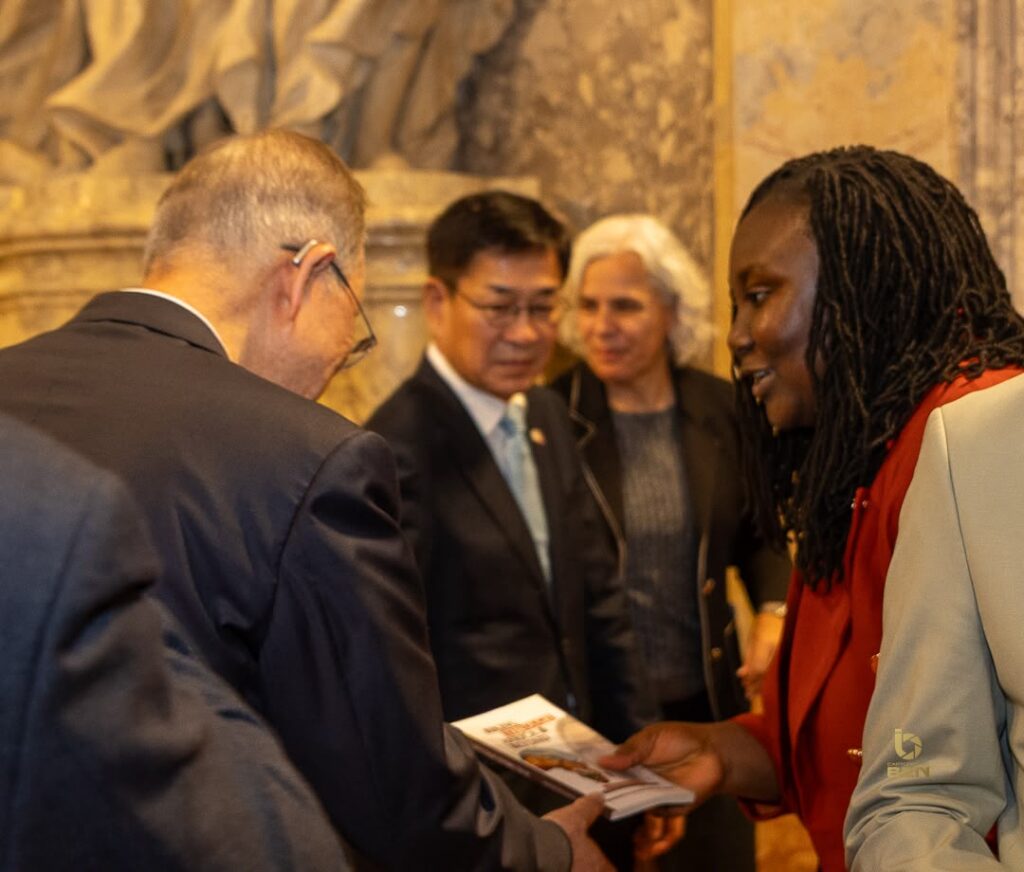
To Secretary-General Ban Ki-moon, for believing in young people and for the scholarship that carried my journey. To Monika Froehler and the Ban Ki-moon Foundation, to Rector Andreas Altmann and MCI, and to Prof. Michael Reiterer, for a warm and honest conversation. And to everyone in the room who came up afterwards to talk.
What’s next
The circle keeps turning. I would love to bring this conversation to more classrooms, communities and stages.
– Watch PeriodxClimate: each episode is about two minutes, on my YouTube channel:
– Host a screening: if you run a school, university or organization and would like to screen an episode and hold a conversation around it, [get in touch: your email or contact page].
– Follow the work: Girls for Development Goals Foundation (girls4developmentgoals.com) and @girls4developmentgoals on Instagram.